Search This Blog

Tuesday, 16 August 2011

Salamanca


Salamanca


Profile:
The Universidad de Salamanca (USAL) was founded in 1218 by King Alfonso IX of Leon, and currently enrolls approximately 30,000 students annually. The Universidad also enrolls almost 700 international students each year. USAL is recognized for academic strength in Biology, Education, History, Philosophy, and Spanish Language and Literature. The Department of Natural and Physical Sciences offers courses in Biology and Biochemistry that correspond to courses at U.S. institutions for students majoring in these fields.


 Salamanca 


  Salamanca 

  Salamanca 


 Salamanca 

Saturday, 13 August 2011

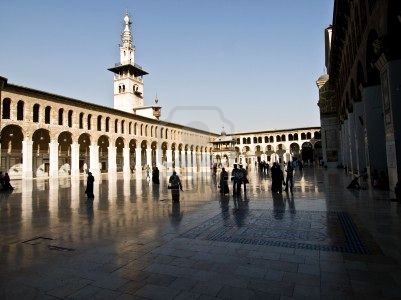
The Umayyad Mosque

The Umayyad Mosque is really well worth a visit. The courtyard and decoration are simply stunning and there is plenty to see and learn about. It is lovely to watch the ways in which people enjoy this wonderful place. You will see plenty of different cultures and religious groups visiting either for religious reasons or simply as curious tourists. Make sure you are conservatively dressed on the day you visit. No shorts for men, and women are likely to be asked to wear a loose hooded robe. Shoes must be removed on entering the courtyard. It is simply a matter of respecting another culture and to my mind all adds to the experience. If you are in old Damascus don't miss out on a visit.

 Umayyad Mosque

  Umayyad Mosque

  Umayyad Mosque


 Umayyad Mosque


Friday, 12 August 2011

Shalimar Garden(Shalimar bagh) Lahore History And Pics

History:

Built in 16th Century by Shahjehan the greatest patron of Architecture It was used as the Royal pleasure Garden by the Moghuls during 16th to 19th century. In 1818 It saw its worst days when it was destroyed by the Sikh ruler Ranjit sing and was used as stable. During English times (1842- 1947) It regained its value as the Garden and was open to Public. After English the Garden was restored by the Pakistan Government and it in use today as popular hang out site.

The Garden had beautiful fountains run with the help of camels now runs occasionally withth electric motors. It has a huge fortification wall around it built during Moghul times. Picture Of Shalimar Garden.

Shalimar gardens have the proud privilege of being the stage of all important state receptions. Outside its walls the annual festival of Mela Chiraghan is held every year during the year of March. Special lights on the first and second terraces of the Gardens have been installed and the area is illuminated half-an-hour after sun-set.


Shalimar Garden

Shalimar Garden

  Shalimar_Bagh  


 Shalimar_Bagh  


Quba Mosque(Masjid Quba) Bio And Pics


Quba Mosque, located in the secluded neighborhood of Medina in Saudi Arabia, is the oldest mosque in the world. who put the first stone by the Prophet Muhammad when migrated from Mecca to Medina city. Prophet Muhammad spent more than 20 nights in the mosque (after hijrah) pray qasr (a short prayer) while waiting for Ali whose house was behind this mosque. According to Islamic tradition, whoever prayed two rak and prayers in the Mosque of Quba na.

Masjid Quba is considered oldest Mosque in the world that is located in Madina City of Saudi Arabia. The special thing about this Mosque is that it was made by hands of Prophet Muhammad SAW and his Sahaba.  According to Hadith the Sawab of offering two Nafl in Masjid Quba is equal to Sawab of doing an Umrah.


 Masjid Quba

  Masjid Quba

  Masjid Quba


 Masjid Quba


..

Jannatul Baqi


The most blessed and spiritual graveyard in the world: Jannatul-Baqi, wherein lie a great number of companions, wives, daughters and other family members of Rasulullah sallallahu alayhi wa sallam.

Allah’s Messenger SallAllahu alaihi wassalam said: "Peace be upon you, O abode of believers. What you were promised will come to pass tomorrow at a fixed time. We shall, Allah willing, soon join you. O Allah! Grant forgiveness to the people who are buried in al-Baqi’ al-Gharqad." (Muslim)

And: "I am the first for whom the Earth will burst open, then Abu Bakr and then Umar. I shall then come to those who are buried in al-Baqi’ and they will be gathered along with me. After that I shall wait for the people of Mecca so as to be gathered among the inhabitants of the two sacred cities." (Tirmidhi)

In the time of Rasulullah sallallahu alayhi wa sallam, this grave yard was thought to be outside of Madina but now it is adjacent to Masjid an Nabwi. Al-Baqi‘ is a powerful place. Other cities consider it their pride to host a single saint; but here there are hundreds. All around lie at rest the men and women who heard the Prophet’s summons, and broke the idols of their forefathers, and gave their lives to his cause.

Imam Malik rahmatullah alayhi (a resident of this blessed graveyard) puts the number of sahabah buried here as 10,000.

May Allah Ta’ala be pleased with them all.


 Jannatul Baqi

  Jannatul Baqi

  Jannatul Baqi

  Jannatul Baqi


 Jannatul Baqi

The Prophet's Mosque History And Pics


History:
The original Prophet's Mosque was built by the Prophet himself, next to the house where he settled after his Hijrah (emigration) to Medina in 622 AD. It was an open-air building with a raised platform for the reading of the Qur'an.

A square enclosure of 30x35 meters, the mosque was built with palm trunks and mud walls and accessed through three doors: Bab Rahmah to the south, Bab Jibril to the west and Bab al-Nisa' to the east. The basic plan of the building has since been adopted in the building of other mosques throughout the world.

Inside, the Prophet created a shaded area to the south called the suffrah and aligned the prayer space facing north towards Jerusalem. When the qibla (prayer direction) was changed to Mecca, the mosque was re-oriented to the south. The mosque also served as a community center, a court, and a religious school. Seven years later (629 AD/7 AH), the mosque was doubled in size to accommodate the increasing number of Muslims.

Subsequent Islamic rulers continued to enlarge and embellish the Prophet's Mosque over the centuries. In 707, Umayyad Caliph al-Walid (705-715) tore down the old structure and built a larger one in its place, incorporating the house and tomb of the Prophet.

This mosque was 84 by 100 meters in size, with stone foundations and a teak roof supported on stone columns. The mosque walls were decorated with mosaics by Coptic and Greek craftsmen, similar to those seen in the Umayyad mosque in Damascus and the Dome of the Rock in Jerusalem (built by the same caliph). The courtyard was surrounded by a gallery on four sides, with four minarets on its corners. A mihrab topped by a small dome was built on the qibla wall.

Abbasid Caliph al-Mahdi (775-785) destroyed the northern section of al-Walid's mosque between 778 and 781 to enlarge it further. He also added 20 doors to the mosque: eight on each of the east and west walls, and four on the north wall.

During the reign of the Mamluk Sultan Qala'un, a dome was erected above the house and tomb of the Prophet and an ablution fountain was built outside of Bab al-Salam. Sultan Nasir bin Muhammad bin Qala'un rebuilt the fourth minaret that had been destroyed earlier. After a lightning strike destroyed much of the mosque in 1481, Sultan Qaytbay rebuilt the east, west and qibla walls.

The Ottoman sultans who controlled Medina from 1517 until World War I also made their mark. Sultan Suleyman I (1520-1566) rebuilt the western and eastern walls of the mosque and built the northeastern minaret known as al-Suleymaniyya. He added a new mihrab (al-Ahnaf) next to the Prophet's mihrab (al-Shafi'iyyah) and placed a new dome covered in lead sheets and painted green above the Prophet's house and tomb.

During the reign of Ottoman Sultan Abdulmecid I (1839-1861), the mosque was entirely remodeled with the exception of the Prophet's Tomb, the three mihrabs, the minbar and the Suleymaniyya minaret. The precinct was enlarged to include an ablution area to the north. The prayer hall to the south was doubled in width and covered with small domes equal in size except for domes covering the mihrab area, Bab al-Salam and the Prophet's Tomb.

The domes were decorated with Quranic verses and lines from Nahj al-Burdah, the famous poem by 13th-century Arabic poet al-Busiri. The qibla wall was covered with glazed tiles featuring Quranic calligraphy. The floors of the prayer hall and the courtyard were paved with marble and red stones and a fifth minaret (al-Majidiyya), was built to the west of the enclosure.

After the foundation of the Saudi Kingdom of Arabia in 1932, the Mosque of the Prophet underwent several major modifications. In 1951 King Abdul Aziz (1932-1953) ordered demolitions around the mosque to make way for new wings to the east and west of the prayer hall, which consisted of concrete columns with pointed arches. Older columns were reinforced with concrete and braced with copper rings at the top. The Suleymaniyya and Majidiyya minarets were replaced by two minarets in Mamluk revival style. Two additional minarets were erected to the northeast and northwest of the mosque. A library was built along the western wall to house historic Qurans and other religious texts.

In 1973 Saudi King Faisal bin Abdul Aziz ordered the construction of temporary shelters to the west of the mosque to accommodate the growing number of worshippers in 1981, the old mosque was surrounded by new prayer areas on these sides, enlarging five times its size.

The latest renovations took place under King Fahd and have greatly increased the size of the mosque, allowing it to hold a large number of worshippers and pilgrims and adding modern comforts like air conditioning.

 Prophet's Mosque

  Prophet's Mosque


 Prophet's Mosque


Thursday, 11 August 2011

Data Darbar Lahore Profile And Pics

Hazrat Data Ganj Bakhsh (Hazrat Ali Hajvery) was a Persian Sufi saint and scholar during the 11th century. He was born in 990 AD in Ghazni, Afghanistan and died in Lahore, Pakistan in 1072 AD. His mausoleum, know as Data Durbar (Data Shrine), is located in the center of Lahore, Pakistan. Thousands of Muslims visit the Data Darbar everyday, to offer Fatiha and pay him tributes. His urs (death anniversary) is held on 18-20 Safar and is attended by thousands of pilgrims. He is the author of many books including his famous book Kashf-al-Mahjub


 Data Darbar Lahore

  Data Darbar Lahore


 Data Darbar Lahore